
French food isn’t overrated. You just did it wrong.
You can’t judge an entire country’s cuisine based on a few disappointing meals you had while vacationing in Paris.
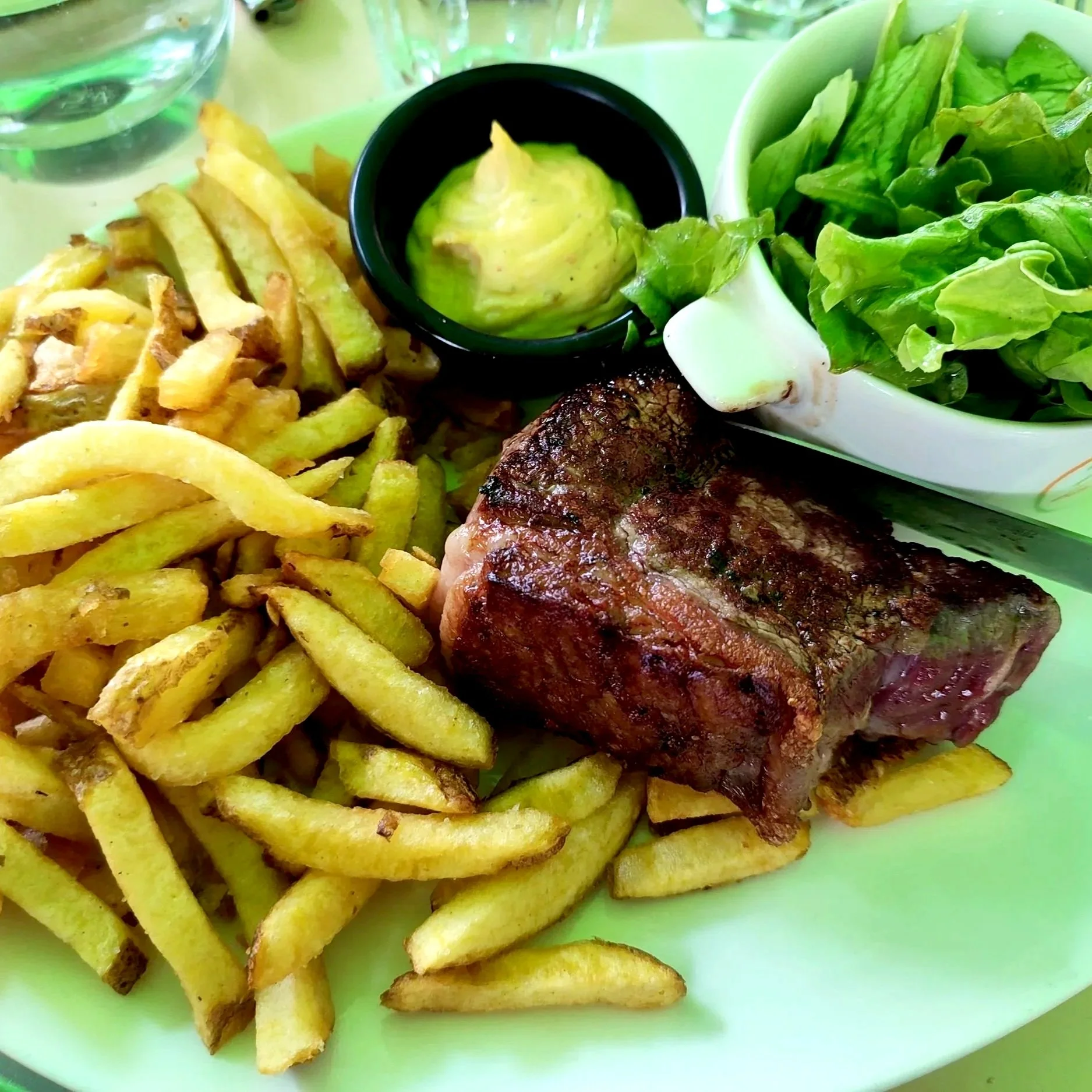
© Stéphanie Lebon - Steak-frites chez 750G La Table, 2021
I recently came across several discussions on Threads about French food being “mid”. The Gen-Z slang made me pause (I’m a 38-year-old millennial who’s been living in Paris for the past 17 years), but I immediately figured it wasn’t a compliment. A quick Google search confirmed my suspicion: calling something “mid” generally means it’s mediocre or underwhelming.
Now, I might be biased, given my adoration of all things French and particularly the food. But I also believe everyone is entitled to their opinion, and no, not everyone has to like French cuisine; I mean, why would you? It’s buttery, creamy, cheesy, rich, comforting, saucy… Yeah, sounds positively affreux¹.
Sarcasm aside, it’s okay to not be obsessed with French cuisine. But to come here, have one bad meal (or even several) and conclude that the entire country’s cuisine is just “meh”? These opinions almost always come from people who visited for a few days and didn’t provide any context about their experience.
The reality: There are a lot of ways to have a bad meal in France. But that doesn’t mean French cuisine is overrated.
Where did you eat?
Where you eat matters. Tourist traps abound, especially in Paris and other major/highly frequented French cities. You’ll usually find them in close proximity to tourist attractions, and there are 3 telltale red flags:
Vast menus that feature not only French food but also random dishes from other cuisines like pizza and Tex-Mex. Also, menus with photos of the dishes are a hard no.
A restaurant host who accosts you on the street. Good French restaurants don’t need to do this and often require advance reservations.
Overly floral façades. A lot of French bistros and cafes have jumped on the Instagram-worthy bandwagon because they know a lot of tourists come for the photos. But don’t expect the food to be anything but sub-par.
Of course, not ALL restaurants near tourist attractions are tourist traps. But you have to do your research and seek out the good ones beforehand. Here are my tips for finding the best restaurants no matter what neighborhood you’re in:
Seek out smaller menus. Growing up in the States, I was so used to having a ridiculous amount of choices when dining out. In France, a big menu often indicates the use of industrial, low-quality ingredients, frozen foods over fresh, and most of what they serve isn’t going to be fait maison². A good rule of thumb is to go for places with just 3-4 options for each course (entrée³, plat⁴, dessert). They might also have a few off-menu suggestions du jour⁵. But that’s it. This allows the chef to do fewer things better.
Chalkboard menus that change daily or weekly are also a good sign. Restaurants that cook seasonally with local ingredients are generally going to be focused on freshness and quality, which shows up on your plate. It also usually means the chef is coming up with more inventive, creative dishes than just your everyday steak frites6.
Look for the label Maître restaurateur7 on an official brass plaque near the entrance of the restaurant. This title or distinction is strictly regulated by the State and requires that the dishes prepared by the chef be made from scratch with mostly raw, fresh and seasonal ingredients. On top of that, there are some 30 more criteria, including service quality, hygiene, etc. that are evaluated and inspected during an official audit. The title is subject to renewal every 4 years.
What did you eat?
What you eat matters.
“Can you really give an informed opinion on an entire country’s cuisine based on a few bad meals or a handful of dishes out of thousands?”
Did you know: France is home to 18 distinct regions (this includes mainland and overseas territories), each with its own culinary identity, local recipes and traditions. It is so much more than just the Parisian bistro staples everyone associates with French cuisine.
Have you tried:
Alsatian flammekueche: a wood-fired, thin-crust savory tart, traditionally topped with crème fraîche, onions and lardons
Aveyron aligot: stick-to-your-ribs, stretchy mashed potatoes made with garlic and fresh tome cheese
Savoyard tartiflette: rich potato gratin with onions, lardons and reblochon cheese
Marseille bouillabaisse: flavorful seafood soup made with multiple varieties of coastal fish in an aromatic tomato-garlic-saffron bouillon
Reunionese rougail saucisses: fresh or smoked sausages in a stewed tomato sauce made with onions, garlic, ginger and other spices
Again, these are only five out of thousands of documented French recipes. So even if you tried a dish from every region of France, it still wouldn’t be enough to truly judge French cuisine.
How did you order?
How you order your food matters. Red meat cooked beyond medium rarely retains good flavor or ideal texture. No shade if that’s how you prefer it, but if you go to a place with poor quality meat, it’s going to be a lot less forgiving. France doesn’t have a “customize-your-order” culture either. Barring severe food allergies, you’re expected to take your food as it comes.
This can be a bit jarring coming from the US, where we’re used to being able to make unlimited substitutions or ask for ingredients to be omitted. It’s very much a “food should taste how I want it to taste” mindset rather than “let me discover all the different ways food can taste.”
In France, depending on the establishment, you might be able to swap side dishes, but it’s not common practice. French menus are designed to pair mains with side dishes that work well together, based on the cooking method and balance of salt, fat and acids. That’s why they often serve red meat with French fries or potatoes, seafood with rice, quiche with salad, etc.
On the other hand, if you're overly picky with your order and ask for it without X and Y ingredients, it can easily turn out bland because French cuisine doesn’t use a ton of ingredients to begin with.
What is French cuisine really known for?
Beyond what food you’re being served, French cuisine really gets its reputation from the renowned and globally respected cooking techniques it employs. They’re precise, complex, and highly technical, with classical French culinary training considered the gold standard for professional chefs around the world.
Think about all the words we use when cooking: sautéing, braising (from braiser), flambéing, deglazing (from déglacer), julienne, roux, mirepoix. These techniques can be found in La Cuisine de Référence, which is THE bible for professional culinary training in France. My husband has a copy from his secondary education at an école hôtelière.8 It contains more than 500 techniques and 3,000 step-by-step photos to demonstrate precise cooking methods.
It’s also worth noting that authentic French cuisine prioritizes ingredient quality, freshness, and flavor harmony. It does not offer an explosion of spice or heavy seasonings that you might get from bolder, more heat-driven cuisines.
What are the different levels of French dining establishments?
When deciding on which type of French restaurant to dine at, there are distinct types to choose from:
Bistro/Café: Everyday, casual eateries that serve classic or modern takes on French dishes, often with chalkboard menus or permanent menus and daily specials that change with the seasons
Brasserie: Slightly more formal than a casual bistro, with service continu9 and a wider range of traditional French dishes from a fixed menu (sometimes including seafood platters, Alsatian specialties); white tablecloths & waiters in formal attire
Bistronomic restaurant: Somewhere between a bistro and a fine dining establishment (bistro + gastronomic); the atmosphere remains casual like a bistro, but the food is more creative and elevated; many offer a menu of small plates to share, paired with high-quality wines
Fine dining restaurant: Offers a more elite dining experience with tasting menus, the use of rare or luxury food products, complex cooking techniques and beautiful presentation; service is highly attentive and may include explanations of each dish, along with suggested wine pairings
Where to find good recommendations?
The next time you come to France, I strongly recommend doing a bit of research beforehand. Sift through the noise, and skip the “hype” recommendations for ones made by local experts or established guides like Le Fooding (for local hotspots) and the Michelin Guide (for fine dining).
Petit bonus
Here are some reliable French Instagram accounts to follow:
@cestmeilleurquandcestbon : Food media brand launched by French culinary journalist Emmanuelle Jary and her partner Mathieu Pansard in 2016, sharing restaurant reviews (especially local, authentic spots), hidden gems & recipes
@gillespudlo : French journalist & food critic, provides lots of local recommendations for French cuisine
@ttbontv : a culinary TV show by French food critic François-Régis Gaudry, dedicated to sharing all his and his crew’s latest bonnes adresses10
@frgaudry : François-Régis Gaudry’s official Insta with more recommendations & recipes
So what’s your take on French cuisine? Let me know in the comments 👇
French word glossary:
1. affreux = awful
2. fait maison = homemade
3. entrée = starter
4. plat = main dish
5. suggestions du jour = daily suggestions, usually made with seasonal ingredients
6. steak frites = steak & fries
7. maître restaurateur = master restaurateur; an official government-issued title given to qualified restaurant owners, following an independent audit
8. école hôtelière = hotel & restaurant management school
9. service continu = all-day, continuous service
10. bonnes adresses = recommendations